
Hafiz Bakhit
WestNile
West Nile has Imported the bulk of its poultry products from the neighboring regions of Acholi, Lango and Bunyoro for many years.
Sector players estimate the annual expenditure on poultry products to be two billion shillings every year on eggs, meat and to a lesser extent feeds and veterinary drugs.
A group of women in the region are now up in arms to disrupt this capital flight from the region’s economy. Their farming method is tested and tried for success amidst the changing geographical weather conditions of the region.
Alice Oriba, the Director of Crown ventures poultry farm, located in Yabiavoko Ward, on the outskirts of Arua City runs a project sitting on about two acres of land along the valley of a small stream which moderates the microclimate of the area.
It is not just a farm, but also a center that spreads climate smart poultry farming to the grassroots small holder poultry farmers.
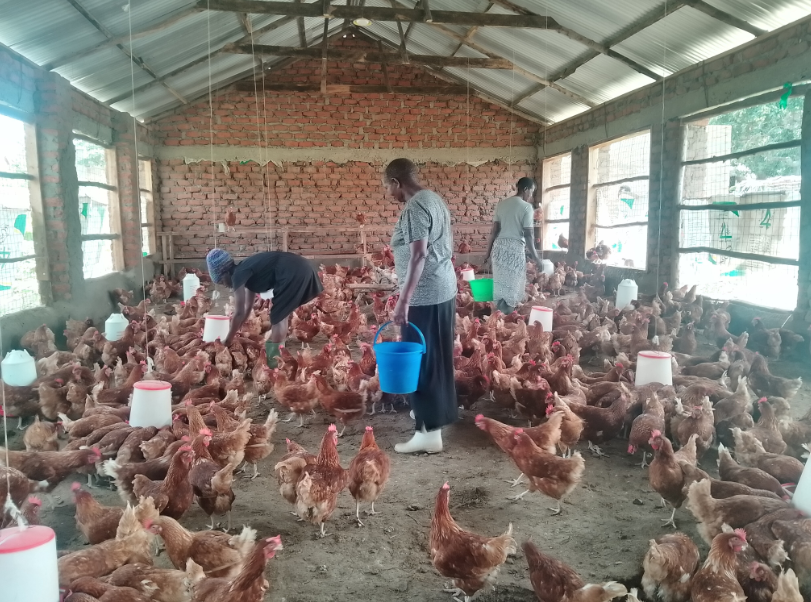
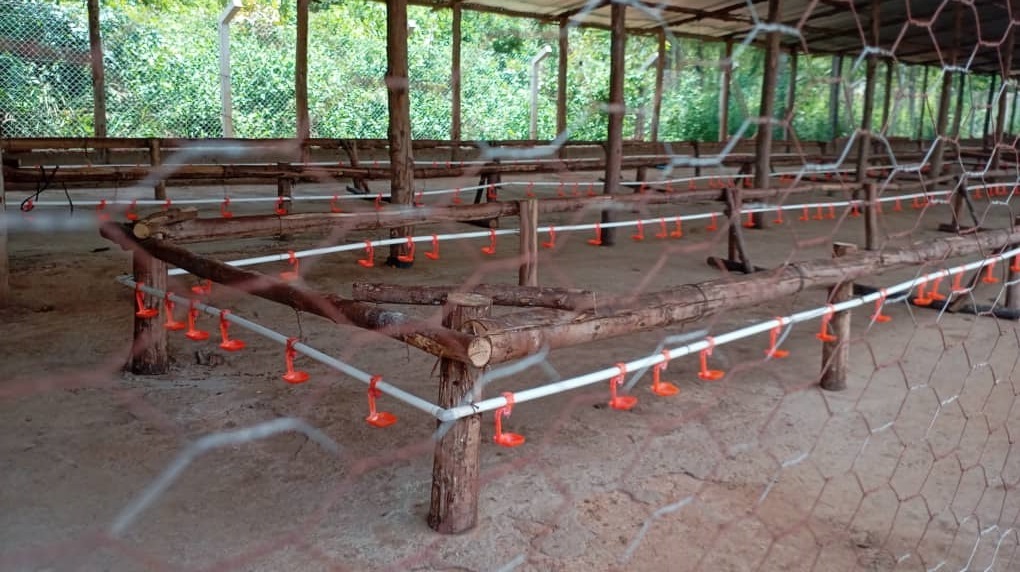
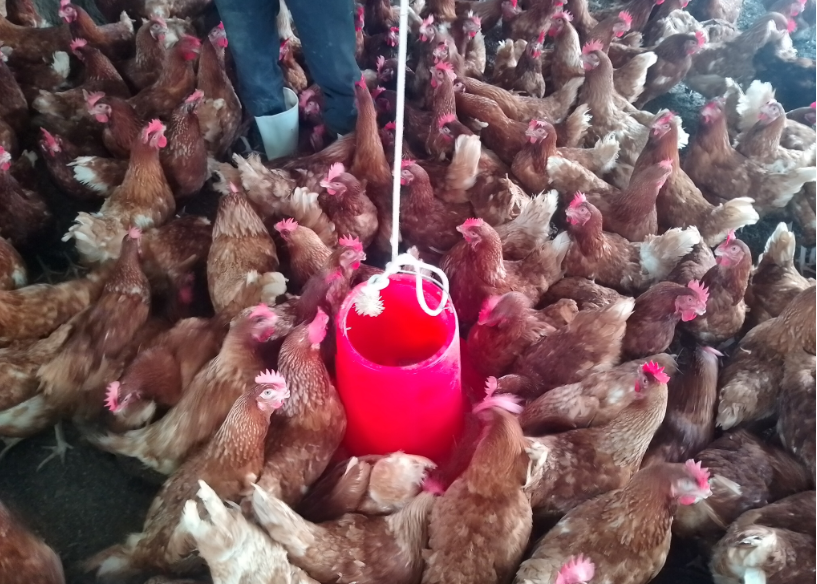
Happy layer birds take turns at pecking feed concentrate meant to stimulate eggs production. They paint the house red like the bricks used in constructing their weatherproof shelters. Double bugler proof wire mesh running across the vast aeration windows, regulated by giant polythene bags during cold evenings and nights. Water automated water drinking lines equipped with peck trigger taps running overhead.
“These are not just water drinkers. They are the lifeline of poultry. We administer vitamins and medications through them. They are like lifesaving cannulas to humans.” Alice proclaimed.
This morning, a convoy of cars, a minibus and two vans transporting agriculture reporters are on a tour of the project, poised to be a major private commercial poultry farm in the West Nile region. Up to 40,000 birds are being raised inside two large rooms for farmers to rent and keep during the laying stage.
Biosecurity measures
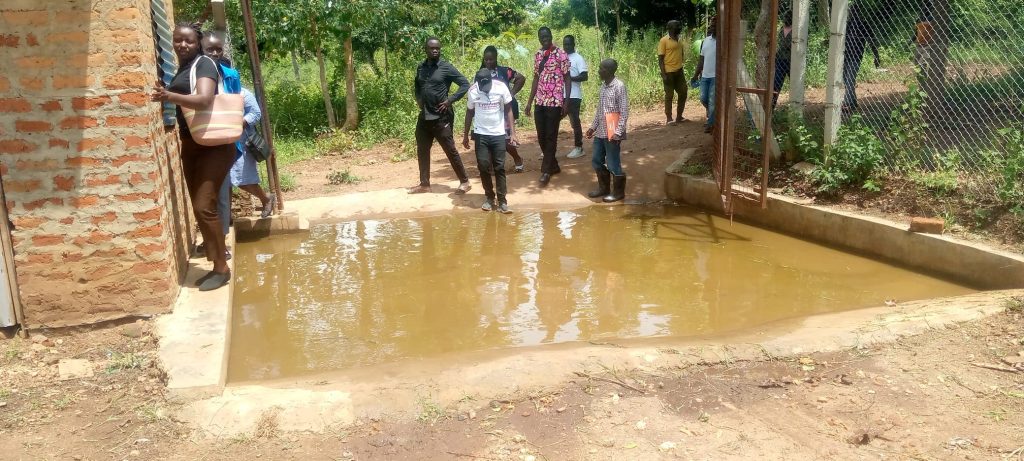
Tucked inside two well manned security gates, the success of the project goes beyond physical security. Just outside the first gate is a pool of water many journalists mistook for poor sanitation practice. To the business owner, profits lie in their open presence.
Oriba then politely requested everyone to disembark and disinfect the soles of their shoes in those disinfectants. “It is a biosecurity measure we implement to prevent infections to the birds. We should have asked you to first bathe from our sanitary before you access the project.” Oriba advised.
To say this is how serious they are may be an understatement until you go there to feel the heat. Cars drive through the same pool before they are released and replenished with fresh disinfectants.
The practice is not just a mandatory wheel wash, but recommended bio-security measures proven to keep pathogens responsible for lethal flock wiping outbreaks of Newcastle disease or coccidiosis. Blended with other best practices including quality of feeds, the women farmers are guaranteed of profits.
Birds leave this site for other women groups located in different locations at the point of lay, ready to start laying eggs. Farmer Group Enterprises Practicing Point of Lay Birds in West Nile
Some groups receive them on credit and pay for them with the keep labor. Profits are then shared at agreed percentages as careers also receive eggs for family meals.
A 2025 report by Arua District Production Department indicated that, over 90% of smallholder (Village) chicken farmers in West Nile experience disease problems with Newcastle Disease being the biggest threat to poultry productions in the region.
A single outbreak wipes between 80% to 100% of an unvaccinated flock within days. Other poultry killers like Salmonellosis, and Coccidiosis drive the final nails to leave poultry farmers frustrated in poverty without capital for reinvestment.
Poultry Loss Drivers
As Disease outbreaks get worse with changing weather, hotter temperatures or erratic rains lead to more pathogens breeding and spreading quickly among poultry which get stressed. Thus, biosecurity isn’t just farm management anymore, it is climate adaptation.
Collins Angujabo, an extension worker from Celavie Livestock hub says, “rapid change in temperature or extreme rainfall create conditions for virus to survive and spread among flock.”
The hub trains farmers to always be alert in readiness for such sudden changes to prevent diseases. Robust routine vaccinations schedules must be adhered to in addition to allowing birds access immune boosting vaccines or vitamins every month. Litter must be removed on schedule as the environment around the poultry house is controlled for pests capable of hosting or transporting disease causing organisms to the project. Ammonia build up is also dangerous like rotten spores developing rotten feeds responsible for respiratory distress.
Over all the project sites, early warning systems exist for extension staff to swiftly mitigate damage to the project through isolation of sick birds or treatment.
Ayikosi women farmers group derives its name from the local language Lugbara word meaning “with happiness.” They are part of this revolutionary network of climate smart poultry farming initiative, supported by Climate Smart Jobs.
Alice Badaru, the chairperson of the group found in Euata Village, Eruba Parish, Vurra Sub County, Arua District says, “through intensive trainings, they have managed to control disease outbreaks and progress in business.”
A survey by the National Livestock Resources Research Institute shows, about 80% of Uganda’s poultry consists of indigenous breeds kept by rural households.
Majority, of these farmers lack knowledge on disease prevention and best farming practices. Unvaccinated flocks in rural areas suffer mortality rates of 40 %
The report also indicates that About 91.7% of Ugandan farmers are aware of diseases like Newcastle Disease, but many lack access to veterinary services. The farmers have never used chicken vaccines, yet Vaccinated flocks see mortality rates drop to 2-5%.
The farmers also lack knowledge on proper storage and transport (maintaining the “cold chain” as a result, vaccines often lose effectiveness, leading to bird deaths, yet vaccinating against Newcastle Disease boosts flock egg production by 80%.
Members of Lanora Poultry Farmers group in Tilevu Yivu East Village, Tilevu Parish, Arua District are among several grassroots small holder’s farmers changing the narratives after attending the training under the climate smart jobs.
Household Impacts
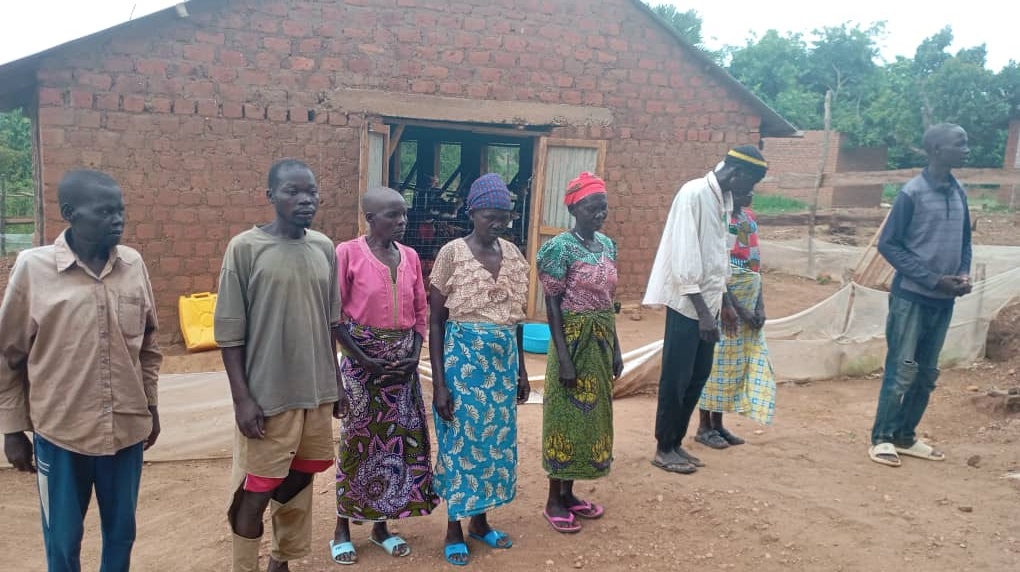
Esau Ozimati, a member of the group consisting of three women and three men is one of many happy farmers under the network.
“We have fenced off our Poultry house to avoid unnecessary contacts by stray livestock and humans, and we have specific changing attires, garments including gumboots for us or visitors to wear before accessing the vital area of the Poultry house”
When Alice Oriba set up her farm, she didn’t build it next to the City Centre, or trading centre, but several kilometres away, down a bush path.
She also confirms that the distance is her first vaccine because of random visitors, no stray chickens hence disease prevention measure. She continues to impact these Ideas to the grassroots poultry farmers.
Using Improved or standard poultry housing does not only help curtail disease outbreaks, but also increase flock size and offtake by 36%, yet many farmers lack training in brooding and farm hygiene.
Chickens drink about twice as much as they eat. Additionally, an egg is about 70% water. If laying hens do not have steady access to water, they will lay fewer eggs, and the shells will become thin or break easily.
If the water is dirty and full of germs, diseases are easily spread hence, farms require constant clean water to keep birds healthy.
Because of these, the local farmer groups have not taken the idea of constant and alternative water sources lightly.
According to Esau Ozimati of Lanora Poultry farm group, a drilled shallow well and solar powered WATER that supplies water to a tank ready for distribution to the poultry house does the work for the members of Lanora Poultry Framers group.
Alice Badaru, of Ayikosi Women Poultry farmers group too testifies that, constant water supply to her chicken is life for them, a reason why the all women group out rightly embraced the Idea of harvesting rainwater through a water tank the group acquired. “This tank has enabled our poultry to get constant clean water” she narrated.
Collins Angudubo of Celavie poultry farm believes, helping farmers create such alternatives save them amid the serious challenges of water scarcity resulting from erratic weather patterns.
Obutava Community Development Poultry farm in Maracha District currently manages about 1000 birds.
With seven Women in a group of 15 members, Gender Composition at Obutava Community Development Poultry Farm (FGE) the resilience of the poultry farm to climate change means more eggs, more profits hence more money in the women’s pockets to better their lives.
Adomati Primo, the Chairperson of the group located in Ambidro Village, Alikua Sub County testifies about the benefits of climate smart jobs to the group as he urges more members of the community especially the women to join poultry farming.
The group now collects between 18-22 trays of eggs daily, earning them at least 200,000 shillings from its sale. Number of Trays of Eggs (Obutava Community Development Farm)
Wider outreach
To expand the reach of the best practices and access to genuine vaccines and vet drugs, Celavie agribusiness enterprise like other service providers under the climate smart Jobs is effectively utilizing the WIIGOT ecosystem by using localized commercial agents to connect smallholder farmers.
Collins Angudubo of Celavie life stock hub says, “We as a company do not have enough members to reach the grassroots farmers in Rural areas, that’s why we Identify interested people who want to deal in our products in the communities, we register them, sign MOU with them, and they get commission after selling our products”
He adds, this helps farmers avoid fake or expired vaccines, access authentic and treatments, to fight poultry diseases in the West Nile.
Whereas Disease Control, Vaccination, proper Housing, Constant Water supply among others are central in a poultry farmer’s battle against climate change, Poultry farming itself is a climate-smart venture which delivers high-quality protein, requires less land and produces fewer greenhouse gas emissions than larger livestock.
Its Resilience offers a quicker return on investment and faster financial turnover compared to other livestock. This diversification acts as a buffer for farmers facing crop failures due to unpredictable weather or droughts.